Wednesday, January 19, 2011

Winter on the Farm


Cold is settling in and it is time to get ready for the next growing season. November and December have been relatively busy for this time of year. We are building a new pole barn in which we can store our equipment and field supplies and create a more sheltered space for processing chickens. On the roof we will have solar panels installed to meet most of the farm's electricity needs.

Above is the beginning framework of the new structure. It was so cold and the wood was green so it wanted to split any time a nail was hammered in so holes had to be predrilled before nails were hammered. Butch Howe has been the lead on this project but here we have Lucas and Tim working in the flurries. Days are short so things didn't seem to move along very quickly.

Winter animal chores are of course a constant. Here is Shona returning from handmilking Sweetheart the cow. Where are your gloves Shona? Tim is more appropriately bundled.

Eleven pigs were butchered mid January. Many of them went to customers wanting half an animal, but we replenished our pork cuts for retail sale as well. Today we loaded up a steer to take to Royal Butcher in Braintree.

With this new supply of meat cuts we are offering meat shares over the winter which will include beef, pork and chicken. The meat shares are picked up once a month and offer an alternative way to get a quantity of meat at a discount from our regular retail prices (and you don't need lots of freezer space) .

Well, this is my first post. I haven't quite gotten the hang of the formatting, but oh well.


Friday, October 15, 2010

October Meat Shares

This is the last meat share of the season. This week you will (or have) receive a whole chicken (4-5 pounds), 2 pounds of ground beef or veal, a pound of veal round cutlets, and about a pound of veal stew meat from the chuck (some of this will be in the form of steaks and a little larger to compensate for the bone; just chop the meat up and add it to your soup or stew). The veal is a new product for us so please let us know what you think of it. And we'd love to get any feedback in general on the meat shares (more/less frequent deliveries, different variety of cuts, anything at all really).

Preparation Tips/Recipes:

Ground Veal: Veal generally is going to have a more delicate flavor than beef and this holds true with the ground veal too. While you certainly can make burgers with it, ground veal also is great in meatloaf or in meatballs (for a great meatball recipe, try the one from Maggie's grandmother that I posted a couple months ago - just use ground veal instead of beef).

Veal Cutlets: Like the ground veal, the cutlets will have a delicate flavor that goes well with a sauce. To prepare the cutlets, cut them into smaller pieces, removing any pieces of fat. Then place them on a cutting board and pound them (I don't have a meat tenderizer so I just use my fist; you might feel weird doing this and others in the kitchen might be alarmed but this will help tenderize the meat). Then I usually prepare a sauce, sauteeing some shallots (or red onion) and a little garlic in butter then adding some white wine and cream and reducing it. In the meantime, I dredge the cutlets in a little flour then sautee them quickly in some butter (probably about a minute on each side - be careful not to overcook them) ) and pour the sauce over the cutlets. Serve with rice or pasta (something to help soak up the sauce!).

If you've got any great recipes of your own for veal, please pass them along!

Wednesday, October 13, 2010

CSA Week 19: October 11-15 (The last week)

Just a reminder that this is the last week of the regular harvest season CSA share. The winter share will start up in early November. More details on the specific dates/times of pick-ups to come but you can expect a good mixture of winter storage vegetables (beets, carrots, regular and sweet potatoes, onions, garlic, squash) and cold weather greens (spinach, kale, chard, etc.). Thanks to everyone who made it out to the farm on Columbus Day for our CSA Harvest Celebration! It was one of those beautiful clear fall days and pizza and cider were delicious. Hopefully everyone who made it enjoyed themselves!

Fall finally has arrived for real here on the farm; we'd gotten a few light frosts but the tomatoes, peppers, eggplant, and beans survived but the cold of the past few nights finally wiped them out. While it's sad to see them go, it makes things a little simpler around here, not having to worry about harvesting them and covering them up at the end of the day. Otherwise, we continue to work on harvesting the storage crops (today we harvested all the Napa Cabbage), building the new greenhouse, and getting the greenhouses planted with cold weather greens.

This week's share:


Preparation Tips/Recipes:

Celeriac: Many of you will be receiving celeriac or celery root this week. It has a flavor similar to celery and should be peeled before using. It can be used as celery would in soups and stews. It also is great grated raw and served in a salad or slaw or chopped up and roasted with other root vegetables (and some peeled winter squash, maybe) along with a little olive oil, salt, and pepper.

Daikon Radish: Another item you will be getting this week is daikon radish. It is an east Asian radish that is quite mild. It is great eaten raw in a salad, or cooked in a stir fry. It also used in making Kimchi, a fermented vegetable dish from Korea. Kimchi is becoming more and more popular in this country as people begin to explore raw and fermented foods more and more. Flack Family Farm makes a delicious Kimchi that is worth a try.

Winter Squash: As you can see from what is included in the share this week, it may be a good week to make some soup. The weather has cooled off and I know I am always in the mood for a good winter soup when the temps drop. You will be getting onions, celery or celeriac, garlic, and a bit of squash this week so squash soup is an easy soup to make and also a great soup to freeze.

Curried Squash Soup

1/2 stick butter
1 winter squash (butternut, buttercup, Red Kuri, or Pumpkins work best)
2 cooking onions
2 cloves garlic
1 apple
2 medium potatoes
3 cups chicken stock (more or less depending on consistency you want to achieve)
2 tablespoons curry powder
salt and pepper

Melt the butter in a saucepan and add onions, garlic, and curry powder. Cook until onions are clear. Peel and cut squash in to chunks and add to pot. Cut apple and potatoes in to chunks and add. Pour stock over everything and bring to a boil. Add salt to taste. Let simmer until squash is soft and blend until smooth in a blender. Serve hot with some fresh bread and butter!

That's all for this week! Thanks from all of us here at the farm! We'll see the winter share members in a couple weeks and hope to see the rest of you next June!

Wednesday, October 6, 2010

CSA Week 18: October 4-8


Sweetheart waiting to be milked in the front yard.

My apologies again for another long hiatus from blog updates. We certainly are in the midst of the harvest season and it just hasn't felt right to take a break from harvesting winter squash with an impending frost. The rain today has finally given us a little bit of a break. So we're all gathered in the kitchen: I'm finally updating the blog, while Maggie washes eggs, and Suzanne shows Lauren (a WWOOFER) how to make fresh mozzarella from our raw milk. Speaking of frost, we got our first frost last Monday but it only really seemed to affect the basil; the peppers, eggplant, and tomatillos are still going. On the harvest front, all the garlic and onions have been dried for a while now. This past week we finished harvesting the last of the winter squash and sweet potatoes. The potatoes have been mowed down and are curing while the storage beets and carrots are waiting to be harvested. The greenhouse tomatoes are winding down and we're beginning to clear them out in order to plant hardy greens for the winter. We also have been busy constructing a new greenhouse. This year the USDA offered a grants to many farms to construct unheated greenhouses with the purpose of exploring more low-cost season extension options. We were fortunate to be the recipients of one of the grants and are in the process of constructing another greenhouse, which hopefully will be ready in time to have winter greens planted into it. So that's what's been going on here. Just a reminder about our CSA gathering and harvest celebration this coming Monday, the 11th. We're planning on the first pizzas coming out of the oven around 4 and also are hoping to have some pumpkin carving, farm tours, and cider making (if we can come up with some apples). Hope to see you all there!

The new greenhouse in progress.


Cleaning out the Tomato greenhouse; the cherries are the first to go.

Lastly, this next week (October 11-15) will be the last week of the regular harvest season CSA share. For those who signed up this spring, the winter share will start up in early November with more info to come on the exact pick-up dates/times.

On to This Week's Share:

Preparation Tips/Recipes:

Braising Greens: These should be a little smaller this week so try adding them to your salad if you like. They're also great stir-fried with the bok choy and leeks or just by themselves. I made some for dinner this week and they were delicious sauteed in olive oil with some chopped garlic, toasted sesame oil, soy sauce and a little grated ginger root.

Pumpkins/Winter Squash: If you don't have a pumpkin, you can just substitute any other squash in this recipe for pumpkin pie. It's quite easy and a great cold/rainy day activity.

Pumpkin Pie

1 single crust
1 1/2 cups cooked pumpkin (or squash)
3/4 cup sugar (white or brown), honey or maple syrup
1 tsp cinnamon
1/2 tsp ginger
1/2 tsp nutmeg
1/2 tsp salt
3 eggs
1 1/2 cups milk/cream
1 tbs butter, melted

Preheat oven to 450. Put the cooked pumpkin in a mixing bowl. Stir in sweetener or choice, spices and salt. Beat eggs slightly and add milk/cream. Combine pumpkin and milk mixtures. Stir in melted butter. Pour into the pastry shell and bake for 10 minutes. Turn the heat down to 350 and continue baking for 35 minutes.

Leeks/Potatoes: This wasn't a great year for either our leeks or potatoes but things have aligned for you to receive both this week. Leek and Potato soup is extremely simple and quite delicious. There are many recipes out there but this recipe from Julia Child is a classic.

Leek and Potato Soup

3 cups potatoes, sliced thinly
3 cups leeks, sliced thinly
1.5 quarts chicken stock
salt, to taste
1/2 cup cream, optional

Simmer vegetables and stock together for 40-50 minutes. Add salt to taste. Puree in blender if desired. Return to pot and stir in cream. Great served hot or cold. If you want, try adding 5 or 6 cloves of garlic with the potatoes and leeks.

That's all for this week. Hope to see you all at the farm on Monday for our CSA Harvest Celebration!

Tuesday, September 14, 2010

September Meat Share

Hopefully you all received your September meat shares without issue last week. As you now know, the September meat share included the regular whole chicken (about 4.5 pounds), 2 pounds of ground beef, and then a Ham Steak (about 2.5 pounds), and then about a pound of steak. Here are a couple ideas of what to do with some of that meat:

Chicken: You all probably have your own recipes or preparations for chicken but I figured I'd post one of my favorite recipes. This recipe calls for roasting a whole chicken in the oven so it works well now that the days are starting to cool off and you don't mind turning on the oven.

Pot-Roasted Tarragon Chicken
Need: butter, leeks, carrots, white wine, dried tarragon, cream, chicken

1. Preheat Oven to 350.
2. Melt 3 tbs butter in a roasting dish. Add sliced leeks to cover the bottom (1/2 inch to 1 inch deep) and cook until leeks are soft
3. Salt and Pepper inside chicken. Brush top of chicken with melted butter and salt the top. Place the chicken on top of the leeks and place in oven for 30-40 minutes. (Make sure leeks don't burn, add a little white wine if it looks like they might or they start to).
4. After 30-40 minutes, slice 3 or 4 carrots and add them around the chicken. Sprinkle 1 1/2 cups white wine over the chicken and sprinkle chicken and carrots with dried tarragon. Salt the vegetables to taste.
5. If you've got a top for your dish (if not, just place it in the oven without a top), cover the chicken and place in the oven for 35-50 minutes
6. 15 minutes before chicken is done, pour 3/4 cup of cream over the chicken and vegetables. Recover and let finish cooking (the chicken is done when the juices run clear and the legs move easily - cooking times may need to be adjusted based on the size of the chicken).
This chicken is great served with rice or egg noodles.

Ham Steak: Ham Steak is very versatile. These are great just pan-fried for breakfast in the morning or you can throw them on the grill to add some nice smoky flavor. You can eat it for breakfast, lunch or dinner.

Steak: So you're all getting different cuts of steak this week. We intended for everyone to get a pound of stew meat but we sold out of stew meat and are instead sending you some meat in steak form that is good for stew. You should have gotten about a pound of either Top Round, London Broil or Chuck Steaks. These steaks all come from the Round or Chuck (shoulder), two of the slightly tougher but more flavorful areas of a beef. Top Round and London Broil especially can be marinated and grilled (preferably rare or medium rare) as steaks (Chuck steak can be too but it might be a little bit tougher). All of these cuts, though, are great chopped up into cubes and then used in a soup or stew!

CSA Week 15: September 13-17


Sorry for the absence of blog posts the past couple weeks. Several people have left over the past few weeks and we've been pretty busy trying to get everything done. And this past week, we've been visited by 3 of the Dartmouth Outing Club freshman trips. Almost all of incoming Dartmouth freshman go on some sort of Outing Club trip before their freshman year begins (two years ago, Lucas went hiking in the White Mountains; 5 years ago, I went fishing up in the Second College Grant; and 27 years ago, Suzanne went hiking in the Presidential Range). So we've had 3 groups of 6-10 incoming freshmen with 2 upperclassmen leaders staying with us here at the farm for 2 days and nights. I think all of them have had a great time here, getting to know the animals, seeing the work that goes into growing vegetables, and even doing some of those monotonous jobs that the rest of us dread (pulling up plastic mulch, weeding 350-foot beds of carrots, picking beans ...). It's been awesome having them here, not only because they've done a lot of things that we might not have been able to get to for some time, but also because we've been getting to know them, watching them get to know and feel comfortable with each other, and seeing (and even feeling) that same excitement that each of us had when we went off to college for our freshman fall. Hopefully you guys all had a good time! Good luck and have fun at Dartmouth!

Back to the animals here, I realized that I haven't really written about the chickens much at all. We processed the last of our meat birds a couple weeks ago, leaving the laying hens and pullets (pullets are laying hens that are less than a year old, our pullets were born in April and have started laying eggs over the past couple weeks) as the only chickens on the farm. We have a flock of about 120 Red Sex-link (a hybrid breed that is a great egg layer) laying hens with 2 roosters to keep them company, and they will be joined this winter by about 65 pullets (we started with 100 pullets in April but had some problems with a fox this spring). Although we don't hatch our own chicks, we choose to have a couple roosters with the hens because it's simply a more natural way for them to live. The laying hens live in mobile houses that are moved at least once a week to fresh ground. They really love this access to pasture and always are excited to have access to new ground, foraging for greens and hunting for bugs. We generally try to have them follow behind the cows and they enjoy digging through the cow pies, sanitizing them of any flies and getting valuable nutrients and animals. Eggs from chickens that have access to pasture have much darker yolks and have more healthy omega-3 fatty acids in them than traditional eggs. Many of you are regular egg customers but if not, hopefully you have a chance to try a dozen eggs; they really don't compare with the eggs you can get in the stores around here.

The layers sometimes get neglected when it comes to food scraps (most of the vegetable scraps go to the cows or pigs) but they same to be only animals that will eat peppers or eggplant. When they do get some vegetable scraps, though, they really love them!

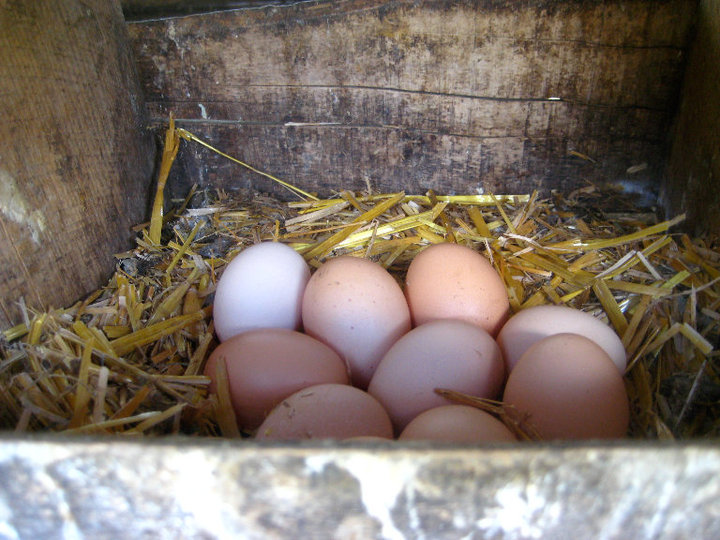
The freshest of eggs!

This week's share: (click to enlarge)


Preparation Tips/Recipes:

Arugula: Arugula is a pretty versatile green. It's great in salads, can be braised or sauteed, or even used to make pesto (simply substitute Arugula for Basil in the pesto recipe below or you could use a mix of Basil and Arugula).

Basil: I realized that I haven't posted a pesto recipe yet. If you've never made pesto before, it's extremely easy (and cheap if you use sunflower seeds instead of pine nuts), and if you have, give this recipe a try or post your own!

Pesto

3 packed cups fresh basil leaves
2 large cloves garlic
1/2 cup pine nuts ($30+/pound, sunflower seeds ($4/pound), or walnuts/almonds
1/4 to 1/2 cup fresh chopped parsley (optional)
3/4 parmesan cheese
1/2 cup olive oil
1/4 cup melted butter
salt to taste

Combine everything in a blender or food processor. Work into a smooth paste. Toss with hot pasta. This recipe works for about six servings of pasta
(from the The Moosewood Restaurant Cookbook)

Winter Squash: We started harvesting our winter squash last week and there is a variety to choose from this week: Acorn, Butternut, Buttercup, Carnival Acorn, Delicata, and Pie Pumpkins. Winter squash is very versatile. Probably the easiest thing to do is cutt it in half and roast it in the oven with a little water to help steam it, then eat it as is or puree it for use in soups or baking.

Tomatillos: Tomatillos are in the same family as tomatoes. They sort of look like green tomatoes except they have a papery husk. These are great for salsa verde and other Mexican dishes. If you're not sure what to do with them, try the salsa verde recipe below.

Salsa Verde (recipe can be scaled up or down easily based on what you have)
4 cups roasted Tomatillos
1 1/2 cups seeded, chopped sweet peppers
1/2 to 1 cup sedded, chopped hot peppers
3/4 cup chopped onion
1 1/2 tsp salt
2 cloves minced garlic
1/4 to 3/4 cup cider vinegar
1 tsp lemon juice
2 tsp cumin
2 tsp olive oil

1. Remove husks from tomatillos, rinse and place in baking pan drizzle with a little olive oil. Roast at 400 for about 30 minutes, stirring occasionally until brown. Puree in food processor or blender with any liquid.
2. While tomatillos roast, prepare peppers, onions, and garlic. Saute with olive oil in large pot.
3. Add roasted tomatillo puree, salt, vinegar, lemon juice, and cumin and cook over medium heat for about 20 minutes.

Serve with chips or as a sauce with other Mexican dishes. This salsa also freezes very well.
(recipe courtesy of Sharon and Jeff Jones)

Tomatoes: You've all been receiving a lot of plum tomatoes the last couple weeks as the regular slicers and heirlooms begin to wind down. This is a great time to make some sauce or salsa to can or freeze. See some past posts on tomatoes for some sauce/salsa ideas.

That's all for this week. As always, please post (or send along) any recipe ideas you have!

Have a good one!

Tuesday, August 24, 2010

CSA Week 12: August 23-27

It certainly seems like the summer is drawing to a close. The nights are getting cooler, the days are getting shorter, some of the leaves are just beginning to pick up some color, and gradually the farm crew is beginning to leave for school, jobs, and other pursuits. This is my second fall of not going "back to school" and while I certainly recognize the time of year, I think relief might be a more accurate word to describe my feelings than nostalgia ... Instead of school, my mind turns to the colder months of the year and a desire to preserve some of the tastes of summer to enjoy during the winter. Over the past few weeks here at the farm, we've begun the process of freezing and canning all the vegetables we can so that we can enjoy them year-round. We've been busy canning and freezing tomato sauce, freezing pesto, salsa, tomatoes, peppers, and we'll start freezing corn soon. So because I didn't get a chance to take a picture of any of the animals this week I'll take a break from introducing an animal and because most of the vegetables in the shares this week are familiar, instead of listing new recipes, I'll post some suggestions of how to preserve these vegetables so that you can eat them year round (instead of all right now; we realize you might be getting a little tired of tomatoes ....)

This week's share (click to enlarge):


Preserving Tips: Just a quick note, most of these will involve freezing vegetables. It's the method that I've had the most success with and I have plenty of freezer space available to me (the biggest issue most people have with freezing). I prefer freezing to canning when it comes to things like Tomato Sauce and Salsa because I like to play around with different recipes. When canning vegetables it is very important to follow tried and true canning recipes to ensure that the level of acidity in the product that you are canning is high enough to kill off harmful bacteria that can cause Botulism. Freezing works for me but if you prefer canning or are limited by freezer space, then check out canning (tomato puree in particular is especially easy to can).

Zucchini: This might be a little late as our zucchini are fading away but zucchini and summer squash can be pureed and frozen for use in soups or they can be grated for later use in baked goods (zucchini bread, muffins, etc.)

Corn: Frozen corn has been a revelation to me here at the farm. I arrived here a recent convert to the deliciousness of absolutely fresh sweet corn but had never tasted any frozen corn that I wanted to eat again. If you're not going to eat your corn the day you receive it (or maybe the next), try freezing it to preserve it for mid-winter. To freeze corn, blanch on or off the cob for 3-5 minutes, rinse under cold water to stop the cooking process, and drain. Store in an freezer bag and reheat in some water if necessary when you're ready to serve it.

Peppers: Peppers are extremely easy to freeze. Simply rinse and seed them, then slice them up thinly and put them on a cookie and freeze them overnight. Then store them in a freezer and take what you need when you're ready. Frozen peppers are best for cooking as they retain their flavor but not all of their texture when frozen. Peppers also can be incorporated into Tomato Sauce or Salsa to freeze. I'm not going to include a specific sauce or salsa recipe here but you can find many online if you want a specific recipe. I never really follow a recipe but for sauce I just usually saute some onion and garlic and add a bunch of chopped tomatoes and a pepper or 2 along with some chopped fresh basil (and maybe some eggplant or fennel if there's some lying around). Let it simmer for a little while until I like the consistency and then freeze it in old yogurt-type containers. For salsa, I do pretty much the same thing except I don't cook anything. I just mix together some chopped peppers, tomatoes, onion, cilantro, and maybe a little salt, lemon juice, and cumin. Give it a taste and adjust according to how it tastes. Then freeze in some airtight plastic containers.

Tomatoes: Tomatoes can be frozen just as you would peppers. Simply rinse them off, cut out the core and any bad spots, slice them up and place on a cookie sheet in the freezer overnight. Then transfer to a freezer bag for the long-term. Like peppers, frozen tomatoes are best when cooked. And of course, tomatoes are a pretty key ingredient for Tomato sauce and salsa.

Beans: To freeze beans, blanch in boiling water for two minutes, rinse in cold water to stop cooking process, drain and store in a freezer bag. Simply reheat with a little water if necessary.

Garlic: Just a quick note about garlic (even though it's not in this week's share) as there have been a few questions. The garlic you have been receiving recently has been dried so it does not need to be refrigerated (it has only been drying for a few weeks so it will be much fresher and juicier than the garlic you would get at the store). The garlic probably is somewhat dirty and the best way to deal with this is to peel the cloves you want to use and then rinse them off. Otherwise simply use (and store) this garlic as you would any garlic you got from the store.

That's all for this week from me. But this would be a great week to share any ideas, recipes, thoughts you have for preserving some of the vegetables that you don't immediately eat. Does freezing work for you or do you prefer the long-term convenience of canning? Whatever it is, it'd be great to hear your ideas!

Have a good one!